
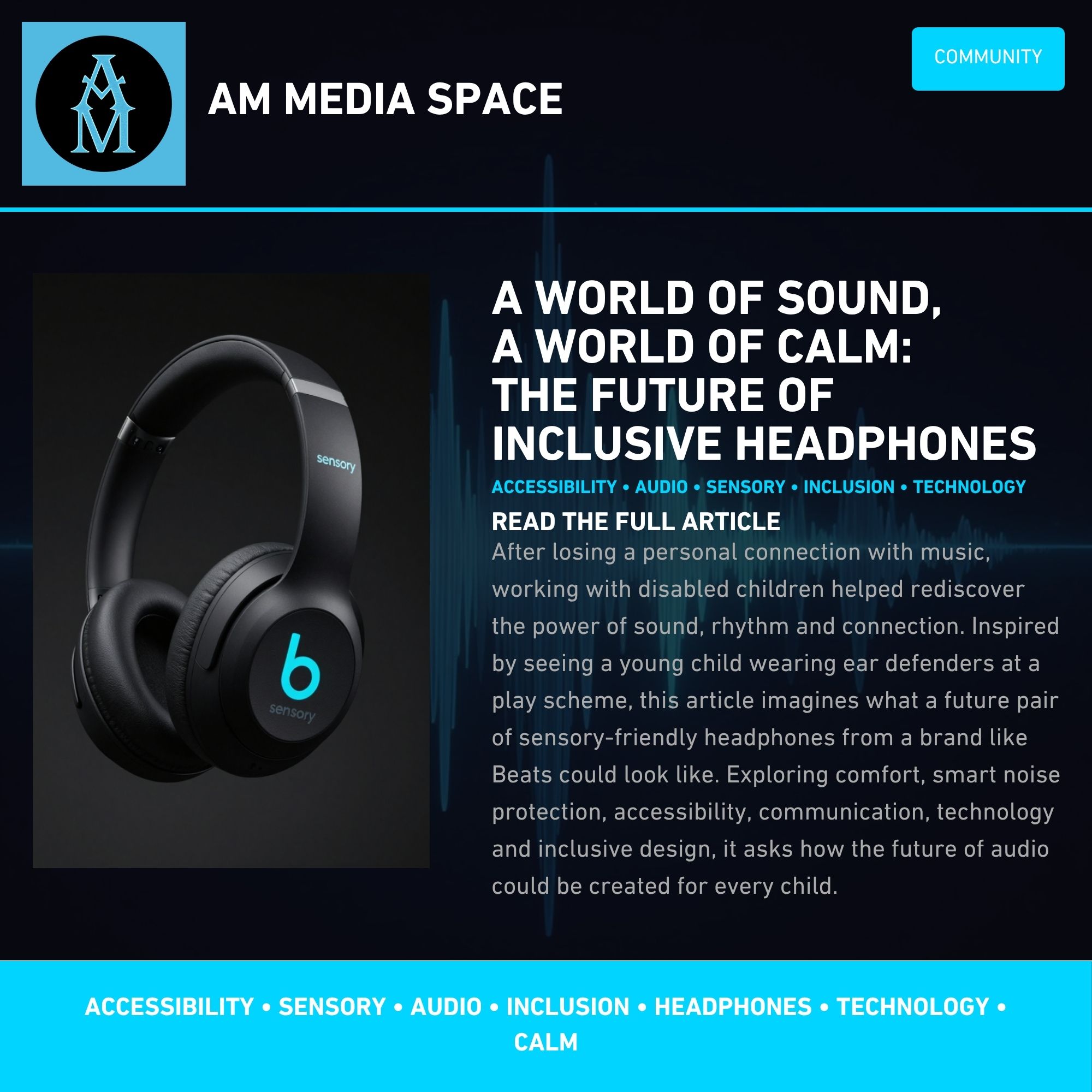
Beats for Every Child: Imagining the Future of Sensory-Friendly Headphones
When Music Finds Its Way Back
I used to love music. It was always there in the background of my life. Whether it was a favourite song playing through headphones, discovering a new artist, or simply enjoying the feeling that music can create, it was something that brought me happiness and connection.
But over time, something changed. The excitement I once had for music slowly faded. The songs that once gave me energy no longer felt the same, and the passion I had for discovering new sounds seemed to disappear.
Then something unexpected happened.
I started working with disabled children at a play scheme, and slowly, that connection with music began to return.
Working with children who experience the world differently opened my eyes to how powerful sound, rhythm and music can be. Music is not just something we listen to; for many people it can be a way of communicating, expressing emotions, calming anxiety, creating memories and feeling connected to others.
During my time at the play scheme, I began noticing how differently children experienced sound. For some children, music and noise created excitement and joy. For others, certain sounds could become overwhelming, stressful or difficult to process.
One day, I noticed a young boy wearing ear defenders.
At first, I thought how cool they looked. They were not just a piece of equipment; they were something that helped him take control of his environment. They allowed him to participate, explore and enjoy the play scheme while managing sounds that might otherwise have been too much.
That moment made me think.
I have always known brands like Beats by Dre for creating headphones that people love because of their style, sound quality and connection to music culture.
But what if a company like Beats created something specifically for disabled children?
What would sensory headphones designed by a world-famous music brand look like?
What if ear defenders were not seen as something purely functional, but something exciting, comfortable and empowering?
This is my imagination in action.
This is not a real product announcement from Beats. It is an idea of what the future of inclusive audio could look like if designers, engineers, disabled children, families and support workers came together to create something truly special.
Introducing the Concept: Beats Sensory Protect
Imagine a pair of headphones designed specifically for disabled children who may experience sensory differences, including children with autism, learning disabilities, sensory processing differences or other needs where sound can sometimes become overwhelming.
The aim would not simply be to block out noise.
The aim would be to help children feel comfortable, confident and included.
These would not just be ear defenders.
They would be a bridge between the child and the world around them.
1. A Child-Friendly Design
The first thing people would notice would be the design.
Many traditional ear defenders are created mainly for function. They do the job of reducing sound, but they may not always feel personal or exciting to children.
A Beats sensory headphone range could completely change that.
Imagine soft, colourful interchangeable covers that allow children to choose their own style. Some children may prefer bright colours and bold patterns, while others may prefer calming colours and simple designs.
The headphones could become something a child feels proud to wear rather than something that makes them feel different.
They could include:
• Fun colours and designs.
• Personalised covers.
• Comfortable materials.
• Options that grow with the child.
• A design that feels modern rather than medical.
The message would be simple: these are not headphones because something is wrong. They are headphones because everyone deserves tools that help them enjoy the world in their own way.
2. Ultra-Comfortable Ear Cushions
Comfort would be one of the most important features.
Some children are extremely sensitive to pressure around their ears or head. A pair of sensory headphones would need to feel gentle from the first moment they are worn.
The design could include:
• Extra-soft memory foam cushions.
• Lightweight materials.
• Breathable fabrics to prevent overheating.
• Adjustable pressure levels.
• Different sizes as children grow.
The perfect sensory headphone would almost feel like a comfortable hug around the ears rather than something restrictive.
3. Smart Noise Protection: More Than Just Blocking Sound
One of the biggest challenges when designing sensory headphones for disabled children would be finding the right balance between protection and connection.
Traditional ear defenders are designed mainly to reduce noise. This is useful, but the future of sensory headphones could go further by giving children more control over the sounds around them.
Imagine headphones that do not simply block everything out, but allow the child, parent, carer or support worker to adjust how much sound is reduced.
A child at a busy play scheme may need a higher level of protection during a loud activity, but later they may only need a small reduction in background noise while still being able to interact with friends.
A Beats sensory headphone concept could include different sound settings such as:
• Calm Mode – reducing overwhelming background noise and helping a child feel more comfortable.
• Conversation Mode – allowing the child to hear voices, instructions and communication while reducing unnecessary sounds.
• Travel Mode – helping during journeys, busy stations, airports or unfamiliar environments.
• Play Scheme Mode – designed for environments where children are moving between activities, groups and different levels of noise.
The idea would be giving children more choice and control rather than simply removing them from noisy situations.
4. Sensory Features Designed Around the Child
Every child experiences sensory information differently. What feels calming to one child may feel uncomfortable to another.
Future sensory headphones could recognise this by allowing personalisation.
Imagine an app designed for parents, carers and support workers where settings could be adjusted depending on the child's needs.
Features could include:
• Personal sound profiles.
• A visual display showing current noise levels.
• A simple way for adults to understand when an environment may become overwhelming.
• Custom settings for different situations.
• Optional calming sensory feedback.
For example, a child could have one setting for school, another for a shopping trip, and another for a play scheme.
The headphones would become a familiar tool that helps the child feel prepared for different experiences.
5. Designed for Play Schemes, Schools and Community Settings
Working in a play scheme environment made me realise how important practical design is.
Children are active. They run, play, explore and move between different activities. Any sensory equipment needs to fit naturally into that environment.
A pair of Beats sensory headphones designed for disabled children could include:
• Strong, durable materials able to handle everyday play.
• Easy-clean surfaces for hygiene.
• Water-resistant protection.
• Adjustable parts suitable for different ages.
• Clear identification options so staff can quickly recognise each child's headphones.
• Safe materials with no unnecessary small parts.
In a busy play scheme, staff often need to respond quickly. A child may suddenly become overwhelmed by noise, and having familiar sensory equipment available can help them remain included.
6. Communication-Friendly Design
One concern with ear defenders is that some people worry they may isolate children from those around them.
A truly inclusive design would recognise that communication is important.
The purpose should not be to shut children away from the world. It should be to help them participate in it.
Possible features could include:
• A quick-access button to reduce sound protection when needed.
• Ear cups that can temporarily move away from the ear.
• Clear indicators showing whether a child wants quiet time or is ready to interact.
• Visual communication symbols for children who communicate without speech.
For some children, saying "I need a break" may be difficult. A sensory headphone system could give them another way to communicate their needs.
7. Technology Features That Could Change Accessibility
Because Beats is known for combining technology with music culture, an imaginary sensory headphone range could include features that make life easier for children and carers.
Possible technology could include:
• Adaptive noise reduction that responds to sudden loud sounds.
• Long-lasting battery life.
• USB-C charging.
• A "find my headphones" feature for misplaced equipment.
• Volume limits controlled by parents or carers.
• A simple accessibility-focused mobile app.
The key would be making technology work quietly in the background while keeping the child at the centre of the design.
8. The Importance of Designing With Disabled Children, Not Just For Them
Perhaps the most important part of this imaginary product would not be the technology, the materials or the branding.
It would be the people involved in creating it.
The best sensory products should be designed with disabled children, families, carers, occupational therapists and support workers involved from the beginning.
Children should have the opportunity to say:
"I like this."
"I don't like this."
"This feels comfortable."
"This helps me."
Too often, products are designed by adults who assume they understand what children need. Inclusive design means listening to the people who will actually use the product.
A child wearing sensory headphones is not just using technology. They are using a tool that may help them access education, friendships, activities and experiences.
The Future of Inclusive Audio
Music has always been about connection. It brings people together, creates memories and allows emotions to be expressed when words are sometimes difficult.
My experience working with disabled children reminded me that sound is experienced differently by everyone.
For some children, the world can sometimes feel too loud, too unpredictable or too overwhelming. A well-designed sensory headphone could help transform that experience.
It could mean a child being able to attend a birthday party, enjoy a play scheme activity, travel somewhere new, sit comfortably in a classroom or simply experience the world with greater confidence.
The future of headphones should not only be about louder music, better bass or the latest technology.
The future should also be about inclusion.
Final Thoughts: A Personal Idea Inspired by One Child
This entire idea came from a simple moment at a play scheme.
I saw a young boy wearing ear defenders and instead of seeing them as just a piece of equipment, I saw a reminder that everyone experiences the world differently.
That moment helped bring back something I thought I had lost: my love for music.
It reminded me that music is not only about hearing songs. It is about emotion, identity, creativity and connection.
Perhaps the future of audio is not just about creating headphones for people who want to hear more.
Perhaps it is also about creating headphones for people who sometimes need the world to feel a little quieter.
And maybe, somewhere in the future, a company like Beats could create something that helps every child experience music, sound and life in a way that works for them.
Comments