
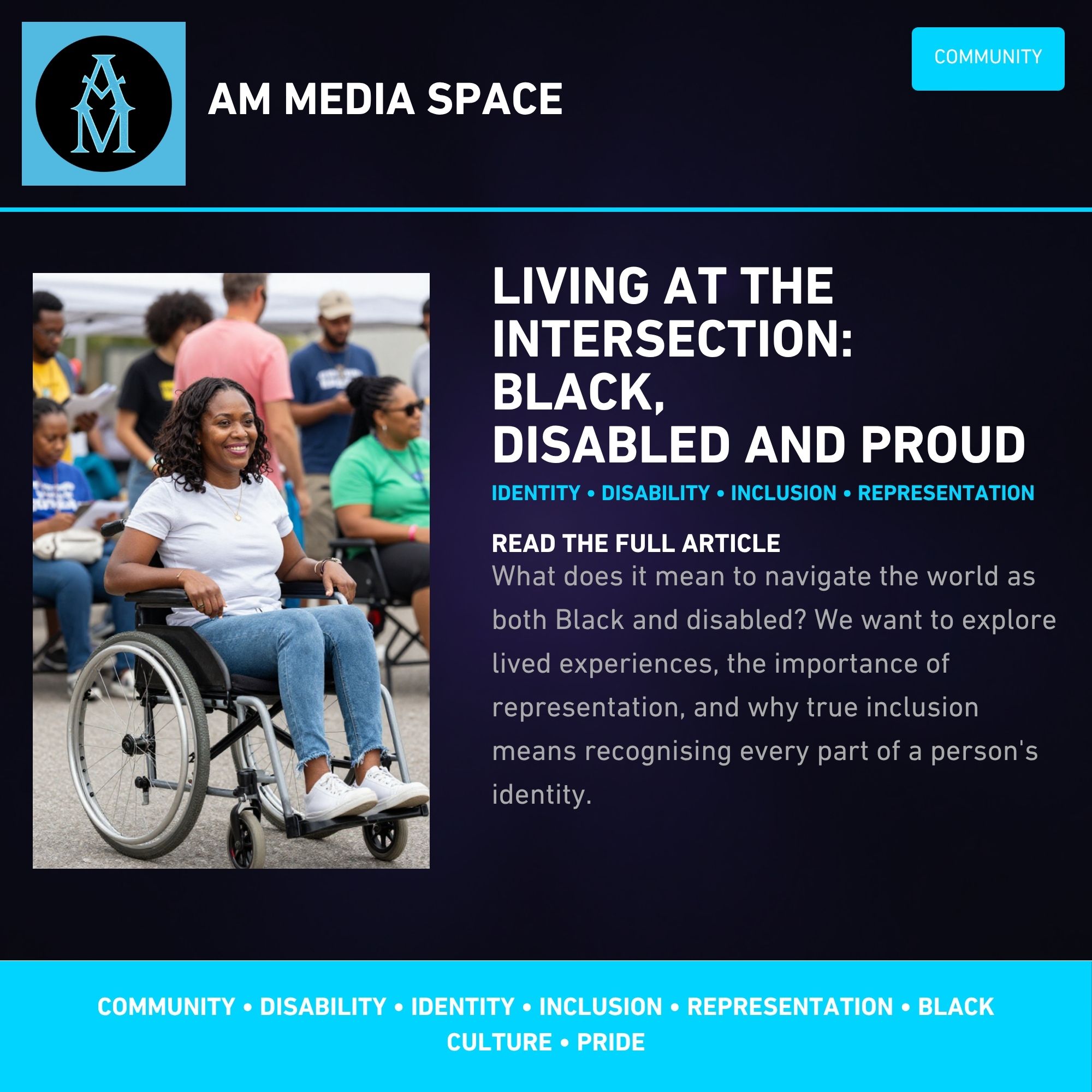
Being Black and Disabled: Living at the Intersection of Identity
Being Black and disabled means navigating two identities that are often misunderstood, overlooked or spoken about in isolation. Yet for thousands of people across the UK and beyond, these experiences are inseparable. They shape how individuals are perceived, the barriers they face, and the resilience they develop in response.
Conversations about disability frequently fail to reflect the diversity of those living with impairments, while discussions about race do not always acknowledge disability. As a result, Black disabled people can find themselves underrepresented in both spaces, with their voices and experiences receiving less attention than they deserve.
Accessibility is not just about ramps, lifts or accessible transport. It is also about representation, understanding and equal opportunities. Black disabled people often face additional challenges in education, employment, healthcare and public life, where unconscious bias and systemic inequalities can combine to create obstacles that others may never encounter.
Healthcare is one area where these experiences can be particularly significant. Some Black disabled people report feeling unheard or misunderstood when seeking medical support, while others experience delays in diagnosis or treatment. Building trust between healthcare professionals and the communities they serve remains essential to achieving equitable care.
Employment presents another challenge. Despite progress in disability rights and equality legislation, many Black disabled people continue to encounter barriers when applying for jobs or seeking workplace adjustments. Employers who embrace inclusive recruitment, accessible workplaces and diverse leadership are better positioned to benefit from the talents and perspectives of all employees.
Education also plays a vital role. Young Black disabled students deserve to see themselves represented positively in schools, colleges and universities. Inclusive teaching, accessible learning environments and visible role models can help foster confidence and ambition from an early age.
Representation matters beyond education and employment. Television, film, journalism, the arts and public life have an important role to play in ensuring Black disabled people are visible not simply as subjects of adversity, but as professionals, creatives, leaders, parents, entrepreneurs and changemakers.
There are countless examples of Black disabled individuals making significant contributions across society. Their achievements challenge stereotypes and demonstrate that disability does not define a person's potential. Instead, they remind us that when barriers are removed and opportunities are equal, talent can thrive.
Being Black and disabled is not solely a story of inequality. It is also a story of resilience, innovation, community and determination. Across the country, individuals and organisations are working to create more inclusive spaces where every voice is heard and every person is valued.
True inclusion means recognising that people do not experience life through a single identity. Race, disability, gender, age and culture intersect in ways that shape everyday experiences. By listening to those with lived experience and ensuring they are part of decision-making, we move closer to building a society that works for everyone.
The conversation about equality cannot afford to leave anyone behind. Being Black and disabled is not about fitting into one category or another; it is about recognising the richness of identity and ensuring that every individual has the opportunity to participate fully, contribute meaningfully and be seen for who they are.
Comments