
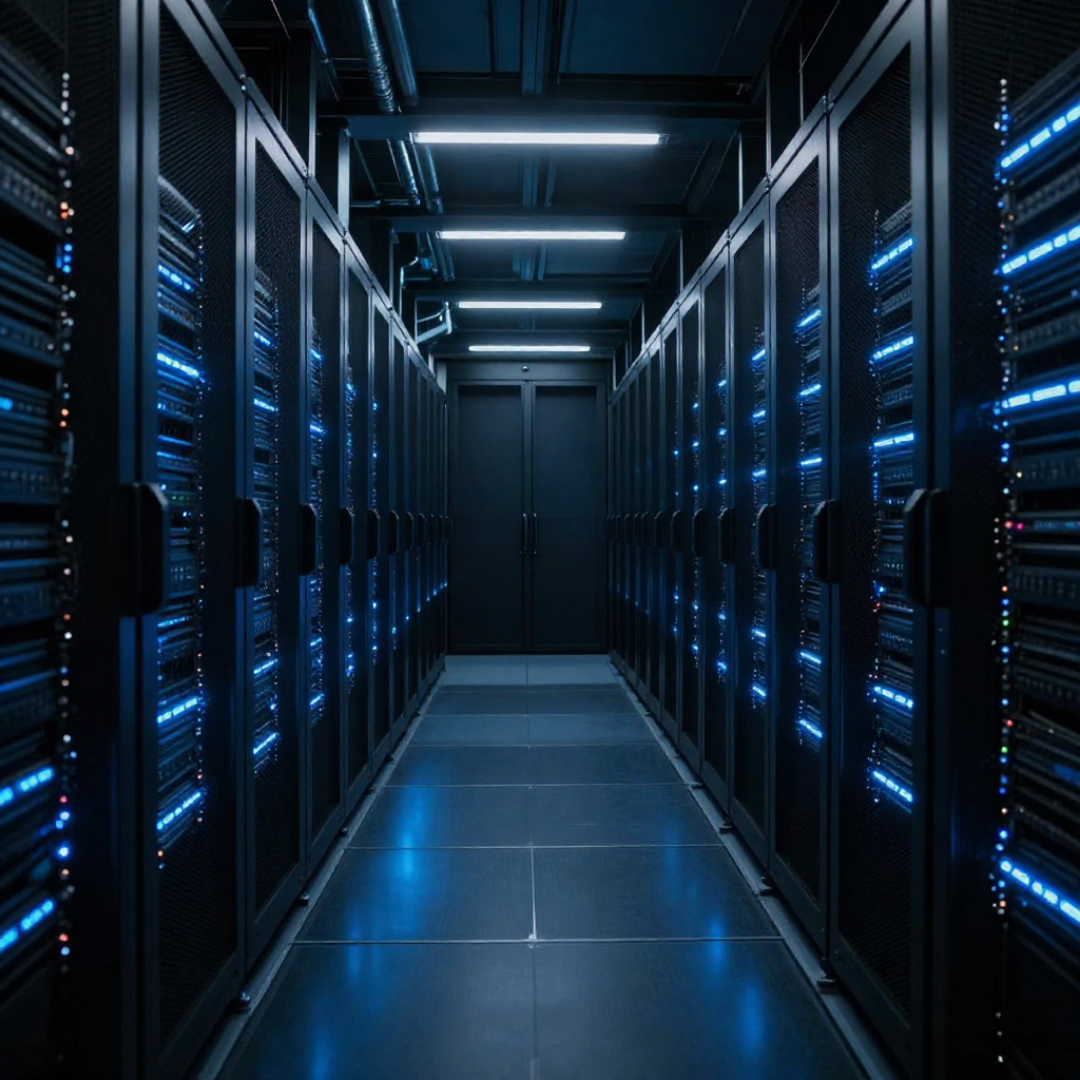
Global Data Centres: The Hidden Infrastructure Powering the Modern World
Every time someone sends an email, watches a video, stores a photograph in the cloud, posts on social media, makes an online purchase, checks a bank account, or uses artificial intelligence, there is a good chance that a data centre is working behind the scenes.
Data centres have become one of the most important yet least visible parts of modern society. They power the internet, support governments, enable businesses to operate, and allow billions of people around the world to communicate and access information instantly.
Although most people rarely think about them, these facilities store, process, and distribute enormous amounts of data every second of every day. As our dependence on digital technology continues to grow, data centres have become critical infrastructure on a global scale.
Questions surrounding security, privacy, resilience, cyber attacks, and even terrorism have become increasingly important as these facilities play a larger role in everyday life.
What Is a Data Centre?
A data centre is a specialised facility that houses servers, storage systems, networking equipment, power infrastructure, cooling systems, and communications technology.
The purpose of a data centre is to store, process, and deliver digital information reliably and securely. Modern facilities operate twenty-four hours a day, seven days a week, often with multiple layers of backup systems designed to ensure uninterrupted service.
Without data centres, cloud computing, video streaming, online banking, social media, artificial intelligence, government services, healthcare systems, and countless other digital services would simply not function.
The Major Global Operators
Several organisations operate some of the largest data centre networks in the world.
Amazon Web Services (AWS) is currently the largest cloud provider globally. AWS operates facilities across North America, Europe, Asia-Pacific, South America, the Middle East, and Africa. Its infrastructure supports websites, databases, artificial intelligence systems, government services, and enterprise applications.
Microsoft Azure operates a vast network of cloud facilities supporting Microsoft 365, business systems, government infrastructure, educational institutions, and AI services.
Google Cloud supports Google's own global services, including Search, YouTube, Maps, Gmail, and Google Workspace, while also providing cloud computing services for businesses worldwide.
Meta operates large-scale facilities that support Facebook, Instagram, WhatsApp, Messenger, and related technologies used by billions of people every day.
Other major operators include Equinix, Digital Realty, CyrusOne, Iron Mountain, Vantage Data Centers, and Telehouse, many of which provide colocation services where organisations can host their own equipment within secure environments.
Major Data Centre Locations Around the World
Data centres are located across every continent and often cluster around major technology hubs and communications networks.
Examples include AWS facilities in Northern Virginia, London, and Frankfurt.
Microsoft Azure operates major campuses in Dublin, London, Virginia, and numerous other international locations.
Google's notable facilities include Council Bluffs in Iowa, Hamina in Finland, and St. Ghislain in Belgium.
Meta operates large campuses in Prineville, Oregon; Forest City, North Carolina; and Clonee in Ireland.
Equinix maintains major facilities including LD5 in London, NY4 in New York, and FR5 in Frankfurt.
Digital Realty operates campuses throughout Europe and North America, including major facilities in London, Paris, and Virginia.
The Telehouse facilities located in London's Docklands are among the best-known internet exchange and connectivity hubs in Europe.
What Information Do Data Centres Store?
The answer is simple: almost everything digital.
Data centres support websites, email systems, social media platforms, cloud storage, video streaming services, business applications, online gaming networks, telecommunications systems, healthcare records, financial services, scientific research databases, and government infrastructure.
Artificial intelligence systems also rely heavily on data centres for training, processing, and deployment.
Common types of information stored within data centres include:
Websites and web applications
Cloud storage systems
Email services
Financial transactions
Social media content
Video streaming platforms
Business databases
Healthcare records
Government services
Scientific research data
Artificial intelligence models
Gaming infrastructure
Telecommunications systems
Backup and disaster recovery systems
Despite their importance, operators generally do not publicly disclose exactly what information is stored within individual facilities. Data is often distributed across multiple regions and replicated across several sites to improve reliability and resilience.
How Secure Are Modern Data Centres?
Modern data centres are among the most secure facilities in the world.
Physical security often includes secure perimeters, controlled access systems, surveillance technology, trained security personnel, monitoring systems, and multiple verification processes designed to prevent unauthorised access.
Cyber security is equally important. Major operators invest heavily in threat detection systems, encryption technologies, security operations centres, and specialist cyber security teams that monitor activity around the clock.
Security is based on multiple layers of protection rather than a single defence mechanism.
Many facilities are also designed with resilience in mind. Power systems, cooling systems, networking infrastructure, and storage platforms are often duplicated to minimise the risk of service interruptions.
Cyber Security: The New Front Line
While physical security is important, many experts consider cyber security to be the greatest challenge facing modern data centres.
Cyber attacks can target software systems, user accounts, applications, networks, and connected services. Criminal groups, state-sponsored actors, and other malicious organisations constantly attempt to exploit vulnerabilities within digital infrastructure.
Major cloud providers invest billions of pounds and dollars every year into cyber security. Their systems are monitored continuously by specialist teams that analyse unusual activity and respond rapidly to emerging threats.
Modern cyber security measures include encryption, intrusion detection systems, multi-factor authentication, network segmentation, threat intelligence, and advanced monitoring technologies.
However, cyber security remains an ongoing challenge because attackers continuously adapt their methods. Protecting digital infrastructure requires constant vigilance and regular updates to security systems.
Why Data Centres Are Considered Critical Infrastructure
Data centres have become so important that many governments now classify them as critical infrastructure.
Critical infrastructure refers to systems and facilities that are essential to the functioning of society. These include energy networks, water supplies, telecommunications systems, transportation networks, healthcare services, and increasingly, digital infrastructure.
If major data centres experienced significant disruptions, the effects could be felt across multiple sectors simultaneously.
Banking services, online communications, government systems, healthcare platforms, and business operations could all be affected depending on the scale and nature of the incident.
For this reason, governments and private operators work closely together to strengthen resilience and ensure continuity of service.
Could Data Centres Become Targets for Terrorism?
Because data centres support critical services and hold vast amounts of information, security experts recognise that they could theoretically be attractive targets for hostile actors seeking to cause disruption.
However, it is important to understand that modern data centres are designed with extensive security measures and contingency planning.
Operators recognise the importance of these facilities and invest heavily in physical security, cyber security, emergency response procedures, backup systems, and business continuity planning.
Many facilities are deliberately designed to withstand a variety of potential risks, including power failures, equipment failures, natural disasters, and other disruptive events.
Security agencies around the world continuously assess threats to critical infrastructure and work with operators to improve protection measures.
While no system can ever be considered completely risk-free, major facilities are among the most heavily protected commercial sites in operation today.
What Would Happen If a Major Data Centre Went Offline?
The consequences would depend on the size of the facility and the services it supports.
A localised outage might affect only a small number of customers or services. However, disruption at a large regional facility could potentially affect websites, cloud applications, communications systems, and business operations.
Fortunately, modern cloud infrastructure is designed specifically to reduce these risks.
Most major providers distribute services across multiple facilities, regions, and countries. Information is often replicated across different locations so that systems can continue operating even if one site experiences difficulties.
Backup generators, multiple power feeds, redundant networking connections, and disaster recovery systems are all used to improve resilience.
As a result, complete long-term outages affecting entire platforms are relatively uncommon despite the enormous complexity of the infrastructure involved.
The Rise of Artificial Intelligence and Data Demand
The growth of artificial intelligence has created unprecedented demand for computing power.
Training modern AI models requires vast numbers of processors working together for extended periods of time. This has increased demand for new data centre capacity around the world.
Major technology companies are investing billions in new facilities designed specifically to support artificial intelligence workloads.
These next-generation facilities often contain specialised hardware capable of handling advanced machine learning and large-scale data processing tasks.
As AI adoption continues to grow, demand for data centre infrastructure is expected to increase significantly over the coming years.
Energy Consumption and Sustainability
One of the biggest challenges facing the industry is energy consumption.
Data centres require large amounts of electricity to power servers, storage systems, networking equipment, cooling systems, and backup infrastructure.
As digital demand grows, operators face increasing pressure to improve efficiency and reduce environmental impact.
Many organisations are investing heavily in renewable energy sources, advanced cooling technologies, and more efficient hardware.
Some facilities now use solar power, wind energy, and innovative cooling methods designed to reduce electricity consumption while maintaining reliability.
Sustainability has become a major priority for both governments and technology companies as they seek to balance digital growth with environmental responsibility.
The Future of Data Centres
The future of data centres is likely to be shaped by artificial intelligence, cloud computing, automation, and continued growth in global internet usage.
New facilities are becoming larger, more efficient, and more powerful than ever before.
Advances in processor technology, cooling systems, energy management, and automation are helping operators manage increasing demand while improving efficiency.
Many experts expect data centres to become even more integrated into everyday life as digital services continue to expand.
Future facilities may support technologies that are still in their early stages today, including advanced AI systems, autonomous transport networks, smart cities, and next-generation communications platforms.
Why Data Centres Matter More Than Ever
Modern society depends on data centres in ways that many people never see.
From banking and healthcare to education, entertainment, communications, shopping, and government services, these facilities underpin much of daily life.
They support billions of online interactions every day and form the foundation of the global digital economy.
Without them, many of the technologies people rely on every day would simply cease to function.
As reliance on digital services continues to grow, the importance of secure, resilient, and sustainable data centre infrastructure will only increase.
Conclusion
Data centres are among the most important and least visible components of modern infrastructure. They store and process enormous amounts of information, support critical services, and enable much of the digital world to function.
The world's largest operators, including AWS, Microsoft Azure, Google Cloud, Meta, Equinix, Digital Realty, and others, collectively support billions of users and countless organisations every day.
While cyber threats, infrastructure risks, and security challenges will always exist, modern data centres are designed with extensive layers of protection and resilience.
Their distributed nature, combined with advanced physical security, cyber security measures, backup systems, and disaster recovery planning, helps ensure that critical services remain available even when disruptions occur.
As technology continues to evolve and artificial intelligence drives new demand for computing power, data centres will remain at the heart of global communications, commerce, innovation, and everyday life.
They may be largely invisible to the public, but they are undoubtedly among the most important buildings in the modern world.
Comments