
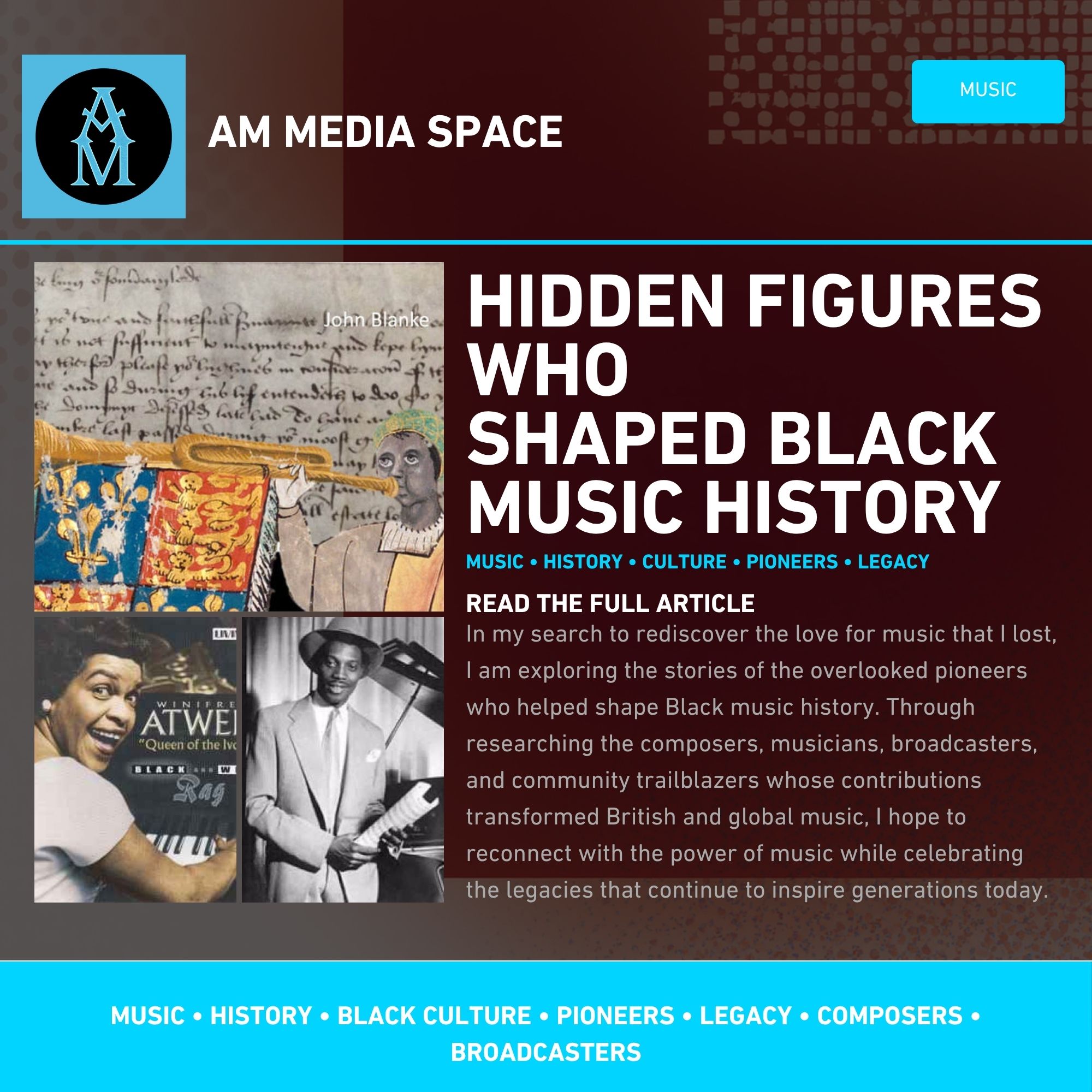
Hidden Figures Who Shaped Black Music History
Summary: Black music has transformed cultures across the world, inspiring generations of musicians and audiences alike. While many legendary performers have become household names, countless pioneers worked behind the scenes or broke barriers long before recognition came their way. Their contributions helped shape British and global music history, leaving a legacy that continues to influence artists today.
When people think about Black music history, names such as Bob Marley, Ella Fitzgerald, Louis Armstrong, Nina Simone and Whitney Houston often come to mind. Their achievements are rightly celebrated around the world. However, behind every famous artist are countless pioneers whose stories are less well known but whose influence has been just as significant.
Throughout history, musicians, composers, broadcasters and community leaders have played an essential role in shaping music while overcoming barriers that often prevented them from receiving the recognition they deserved. Their work influenced not only music but also culture, education and society itself.
Many of these hidden figures challenged prejudice through creativity, proving that music could unite communities, preserve cultural identity and inspire social change.
John Blanke: One of Britain's Earliest Recorded Black Musicians
One of the earliest known Black musicians in British history was John Blanke, a royal trumpeter who served in the Tudor court during the reign of King Henry VII and later Henry VIII. Historical records and artwork show that Blanke held an important position within the royal court at a time when very few details about Black lives were documented.
His presence reminds us that Black history in Britain stretches back centuries and did not begin with the arrival of the Windrush Generation in 1948. His story challenges common assumptions about Britain's cultural past and demonstrates that Black musicians have contributed to British society for hundreds of years.
Samuel Coleridge-Taylor: The Composer Who Conquered the Concert Hall
Samuel Coleridge-Taylor became one of Britain's most respected composers during the late nineteenth and early twentieth centuries. Born in London to an English mother and a father from Sierra Leone, he demonstrated extraordinary musical talent from an early age.
His most famous work, Hiawatha's Wedding Feast, became an international success and was performed regularly throughout Britain, Europe and North America. Despite experiencing racial prejudice during his lifetime, Coleridge-Taylor gained admiration from audiences across the world and inspired future generations of Black classical musicians.
Today, his work is increasingly recognised as an important part of British musical heritage.
Leslie Thompson and the Growth of British Jazz
Before jazz became firmly established within British culture, Jamaican-born trumpeter Leslie Thompson was helping introduce new musical styles to audiences across the country.
As a performer, composer and bandleader, Thompson played an important role in developing Britain's early jazz scene during the 1930s and 1940s. His influence extended far beyond the stage as he mentored musicians and helped create opportunities for Black performers at a time when discrimination remained widespread.
Winifred Atwell: Breaking Records and Breaking Barriers
Born in Trinidad, Winifred Atwell became one of Britain's most successful entertainers during the 1950s. A gifted pianist, she combined classical training with popular music, boogie-woogie and ragtime, captivating audiences across the United Kingdom.
She became the first Black artist to achieve a number one record in the UK, proving that talent could overcome barriers even during periods of significant social prejudice.
Although enormously popular during her career, her achievements are sometimes overlooked in discussions about British music history.
Lord Kitchener and the Sound of the Windrush Generation
When the Empire Windrush arrived in Britain in 1948, one of its passengers was Aldwyn Roberts, better known as Lord Kitchener.
A celebrated calypso singer from Trinidad, he brought Caribbean musical traditions to Britain and became an important voice for the growing Caribbean community.
His music celebrated hope, identity and resilience while documenting the experiences of migrants building new lives in post-war Britain.
His performances introduced many British audiences to calypso music, laying foundations for future generations of Caribbean artists.
Russ Henderson and the Birth of Steel Pan Culture in Britain
Another influential musician from Trinidad was Russ Henderson, whose work helped establish steel pan music within British culture.
Steel pan music had developed from the creativity of Trinidadian communities, transforming oil drums into musical instruments capable of producing rich melodies.
Henderson introduced this unique musical tradition to Britain and played a major role in creating what would eventually become the Notting Hill Carnival, one of the largest cultural festivals in Europe.
Today, steel bands remain an important symbol of Caribbean heritage and community celebration throughout Britain.
Claudia Jones: The Woman Who Used Culture to Build Community
Although Claudia Jones was not a musician herself, her contribution to Black music history cannot be overlooked.
A journalist, activist and community leader, she organised one of the earliest Caribbean indoor carnivals following the racial tensions of the 1950s. Music became a powerful tool for bringing communities together and celebrating Caribbean culture.
Her vision eventually inspired the development of the modern Notting Hill Carnival, where music continues to play a central role in cultural expression.
Cy Grant: Music, Broadcasting and Representation
Cy Grant enjoyed a remarkable career as a singer, actor, writer and broadcaster.
After serving in the Royal Air Force during the Second World War, he became one of Britain's earliest Black television personalities.
Grant believed that music could encourage understanding between cultures and spent decades promoting diversity through broadcasting and performance.
The Importance of Community Organisations
Many hidden figures in Black music history have never recorded chart-topping albums or appeared on television. Instead, they worked within local communities, teaching young musicians, preserving archives, organising festivals and passing traditions from one generation to the next.
Community organisations continue to play a vital role in ensuring these stories are not forgotten. Heritage researchers, youth workers, librarians and volunteers often dedicate years to collecting photographs, recording oral histories and documenting the achievements of local musicians whose contributions might otherwise disappear.
Why Preserving Black Music History Matters
Music tells the story of people. It reflects migration, identity, celebration, struggle and hope.
Preserving Black music history ensures that future generations understand how different cultures have shaped modern Britain. It also provides young people with role models whose achievements demonstrate that creativity can overcome barriers and bring communities together.
Many schools, museums, libraries and heritage organisations now work to ensure these stories become part of mainstream history rather than remaining hidden in archives.
The Influence We Still Hear Today
The legacy of these hidden pioneers continues to influence today's artists. Elements of jazz, calypso, reggae, gospel, soul, rhythm and blues and steel pan music can be heard across contemporary pop, hip-hop, electronic music and film scores.
Modern musicians often build upon traditions established decades earlier, whether knowingly or not. Every generation adds something new while carrying forward the work of those who came before.
Looking Beyond the Headlines
History often celebrates the biggest stars, but true cultural change is usually shaped by hundreds of dedicated individuals working quietly behind the scenes.
Teachers who inspire children to play an instrument. Volunteers who organise community festivals. Researchers who preserve forgotten archives. Broadcasters who give emerging musicians a platform. Community leaders who recognise that music has the power to unite people from every background.
These individuals may never become household names, yet their influence can last for generations.
Celebrating Every Contribution
Black music history is far richer than a list of famous performers. It is a story of composers, educators, broadcasters, researchers, activists and community organisers whose dedication has helped shape Britain's cultural identity.
By celebrating both the well-known legends and the hidden figures who worked alongside them, we gain a fuller understanding of how music has influenced society. Their stories remind us that history is built not only by those in the spotlight, but also by those whose passion, perseverance and creativity quietly changed the world.
Comments