
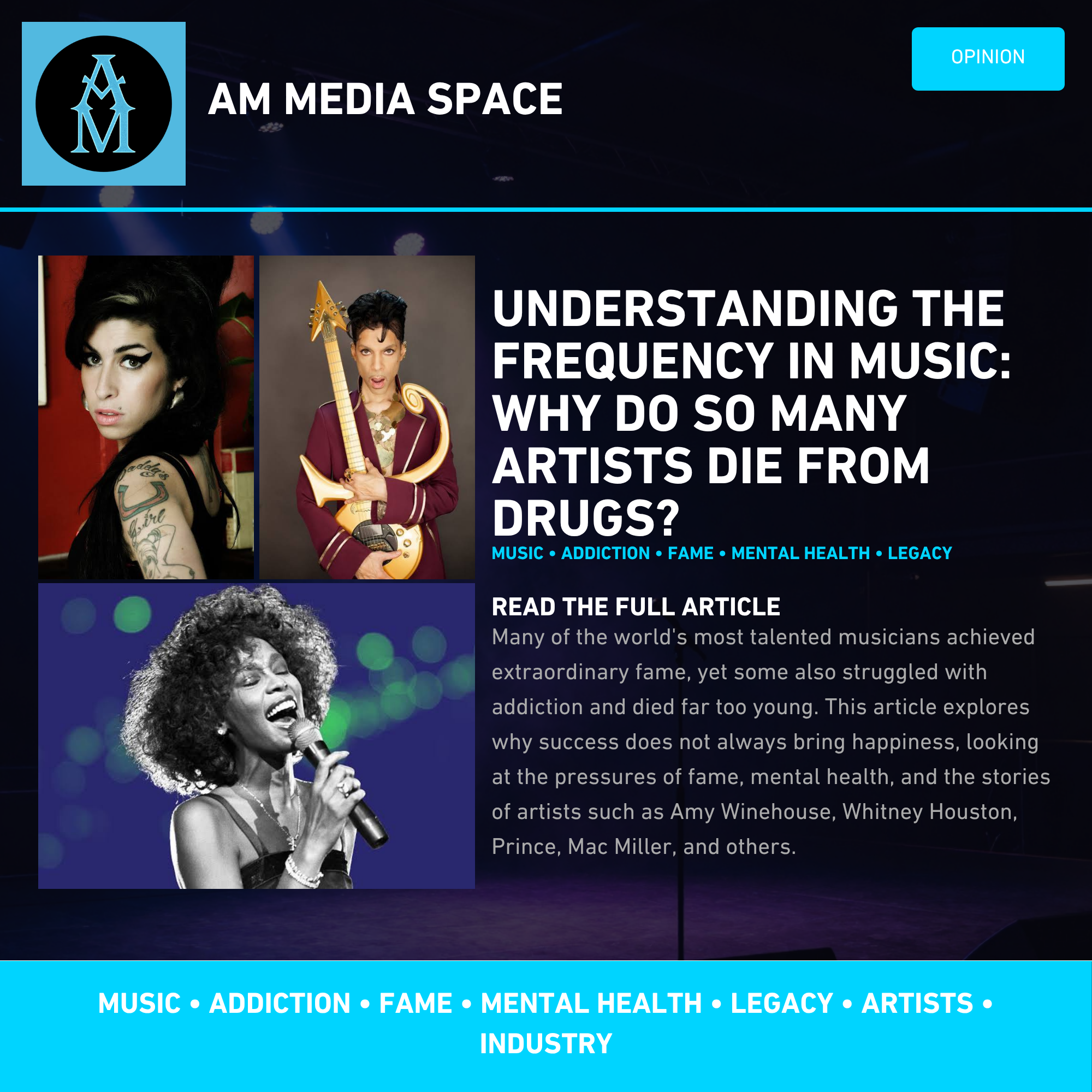
I'm often interested in why so many famous artists seem to die from drug overdoses. It has always made me wonder whether fame can really be that distressing. Growing up, I imagined that becoming a successful singer or actor would mean that all of your dreams had finally come true. You would have financial freedom, millions of fans, and the opportunity to do what you love every day. So why does it seem that, for some artists, success is followed by addiction, loneliness, and sometimes a tragic early death?
The reality is that fame isn't always the glamorous lifestyle it appears to be from the outside. While success can bring wealth and recognition, it can also create enormous pressure. Every performance is judged, every mistake becomes headline news, and every personal struggle can become entertainment for the world to watch. Many artists describe feeling isolated despite being surrounded by thousands of people.
Amy Winehouse is perhaps one of the most heartbreaking examples. Her voice was unlike anyone else's, blending soul, jazz, and rhythm and blues into music that still resonates today. Albums like Back to Black turned her into one of the biggest stars in the world, yet behind the success she was battling addiction, alcohol dependency, an eating disorder, and intense media attention. Every setback seemed to become front-page news rather than a private struggle. In 2011, Amy Winehouse died from alcohol poisoning at just 27 years old, leaving behind a catalogue of music that continues to inspire millions.
Whitney Houston was another extraordinary talent whose life ended in tragedy. Widely regarded as one of the greatest vocalists of all time, she achieved incredible success and influenced generations of singers. However, years of substance abuse affected both her health and career. In 2012, she drowned in a hotel bathtub, with heart disease and cocaine use listed as contributing factors. Her passing shocked the music world and reminded people that fame does not protect anyone from addiction.
Other artists have suffered similar fates. Prince died from an accidental overdose involving prescription opioids after years of quietly dealing with chronic pain. Tom Petty also died from an accidental overdose of prescribed medications while managing severe health issues. Mac Miller's death highlighted the dangers of counterfeit drugs, while Juice WRLD died following complications related to drug use. These stories are different, but they all point to the same painful truth: addiction can affect anyone, regardless of wealth, talent, or success.
Some people believe drugs are linked to creativity, but there is very little evidence to support that idea. Many musicians produce their greatest work through discipline, practice, and emotional honesty rather than substance use. While some artists may begin using drugs to escape anxiety, depression, trauma, physical pain, or the relentless pressures of touring and public life, addiction often takes away the very creativity people believe it enhances.
The music industry itself can also contribute to the problem. Long tours, constant travel, irregular sleep, demanding schedules, and easy access to alcohol and drugs can create an unhealthy environment. New artists may suddenly find themselves surrounded by people who rarely say no to them, making it harder to recognise when they need help. At the same time, social media and the 24-hour news cycle can magnify every mistake, creating even more pressure.
There is also the emotional side of fame that many people never see. Becoming famous doesn't erase childhood trauma, anxiety, depression, or personal insecurities. If those struggles already exist, fame can sometimes amplify them instead of healing them. Success can solve financial problems, but it cannot automatically provide peace of mind or emotional wellbeing.
Of course, it is important to remember that many successful musicians live healthy, balanced lives and never develop substance addictions. Their stories simply receive less attention because tragedy often attracts more headlines than stability. For every artist whose life is cut short, there are countless others who quietly continue creating music for decades.
Perhaps the real lesson is not that music leads people towards drugs, but that fame often exposes existing vulnerabilities while creating entirely new pressures. Addiction is a complex illness rather than a simple choice, and behind every headline is a human being who may have been struggling in ways the public never fully understood.
When I think about artists like Amy Winehouse, Whitney Houston, Prince, Mac Miller, and many others, I don't just think about how they died. I think about the incredible music they left behind and wonder how much more they could have created if they had received the support they needed. Their stories remind us that talent and success can exist alongside pain, and that compassion is often far more valuable than judgement.
Comments